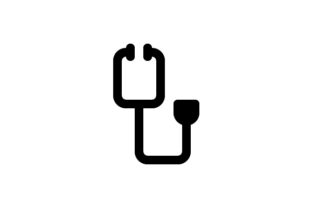
Stethoscope Glyph Icon: A Review for Embroidery Project Use
When you're looking for a design to stitch, especially one destined for client projects or your small shop merchandise, the first question isn't just about file formats. It's about how it will translate from screen to thread. Today, I'm thinking through the Stethoscope Glyph Icon, a medical-themed graphic, for real embroidery work.
A First Impression: Clean, Professional, and Quietly Confident
The mood here is unmistakably medical, but it’s delivered with a modern, minimalist sensibility. The glyph shape, based on a grid structure with a clear 2px line, feels crisp and orderly. There’s no fussy detail, which is a significant advantage for embroidery. This isn't a noisy, chaotic design; it's a quiet, confident symbol. Its visual personality is professional and instantly recognizable, perfect for projects where clarity and trust are paramount. I immediately picture it on a nurse's custom embroidered tote bag or a personalized lab coat patch—it speaks to a community with authority.
Where This Design Finds Its Natural Home
Let's walk through some real-life scenarios. Imagine you're preparing a custom sweatshirt for a graduating medical student. This icon, stitched in a single, bold thread color on the chest, would look sharp and meaningful. For a baby item in a nursery-themed boutique, paired with a simple name, it could create a charming, personalized gift for a healthcare family. As an embroidered patch on a cap or apron, it holds its shape well thanks to that defined line work.
It naturally excels in projects where brand consistency and professionalism are key. Think about:
- Apparel decorators creating uniforms or team shirts for a clinic.
- Etsy sellers offering “medical student survival kits” with embroidered pillow covers or tea towels.
- Craft fair vendors with a line of tote bags for local hospital staff.
- Even as a digital product seller, including this clean icon in printable mockups for clinic branding adds value.
The simplicity boosts customer recognition and, when stitched well, significantly enhances the perceived product value and handmade presentation. It feels like a serious design asset.
Practical Considerations for Stitching Success
However, that clean simplicity also demands careful execution. The 2px line detail in the digital file translates to a relatively fine line in embroidery. On highly textured fabrics like some sweaters, or on stretchy fabric without proper stabilizer, those fine lines could lose clarity. Small hoop sizes are possible, but you must ensure your machine's stitch density can render the details without filling them in or skipping them.
This design should be used carefully on:
- Dark fabric, where thread color contrast is absolutely critical—a light or bright thread is essential.
- Curved surfaces like caps, where the linear shape might need slight digitizing adjustments to lay flat.
- Products destined for frequent washing, as fine, dense stitch areas can be more vulnerable to wear.
The lack of intricate corners is a relief, but the overall shape’s integrity relies on clean satin or running stitch borders.
Embroidery Designer Notes Before You Hoop the Fabric
My standard advice for any graphic like this applies doubly here. Always test the design on scrap fabric first. Use the same material and stabilizer you plan for the final project. Check how the lines look—are they distinct? Does the fill stitch, if any, feel too dense for the fabric weight?
Since the provided files are EPS, AI, and SVG, they are vector formats ideal for scaling before sending to your embroidery software. The "pixel perfect at 28px" note suggests it was built with precision, but you must confirm your final hoop size and scaling within your embroidery machine's system. Inspect the small details in your software preview. Also, test it in black and white mockups to see how it reads without color, and compare its impact on both light and dark fabric backgrounds.
Most importantly, check the licensing before selling finished items or digital products. The product description doesn’t specify terms, so you must verify that commercial use is permitted for your craft business or small shop product.
The Final Stitched Impact: Clarity and Trust
When executed properly, the Stethoscope Glyph Icon embroidered on a finished product creates a powerful sense of trust and engagement. It’s a symbol that resonates deeply with a specific audience, increasing the giftability of items like holiday presents for a doctor or wedding gifts for a medical couple. For commercial embroidery projects, it lends an air of institutional reliability.
It’s a design that doesn’t shout; it states. And in the world of machine embroidery design, where every stitch counts towards customer satisfaction, that quiet statement, rendered clearly in thread, can be exactly what makes a personalized gift or custom apparel item truly exceptional. My practical judgment is that this glyph is a strong, versatile candidate, provided you give its translation from graphic to stitches the focused attention it deserves.